


Face-led design
Tooth form, shade and smile line are considered in relation to lips, face and personal character.
A beautiful smile should suit your face, smile line and personality; a safe plan must also respect tooth structure, gum health and bite.
Subservices help you understand the treatment range. The clinician confirms the suitable approach after assessing the real condition.
 Service
Porcelain Veneers
Thin facial restorations for suitable cases, with preservation of tooth structure considered in planning.
Read more →
Service
Porcelain Veneers
Thin facial restorations for suitable cases, with preservation of tooth structure considered in planning.
Read more →
 Service
Porcelain Crowns
Full-coverage restorations when tooth structure, existing work or the indication requires broader coverage.
Read more →
Service
Porcelain Crowns
Full-coverage restorations when tooth structure, existing work or the indication requires broader coverage.
Read more →
 Service
Premium Ceramic Crowns
Restorations focused on optical properties, morphology, personalisation and detailed laboratory finishing.
Read more →
Service
Premium Ceramic Crowns
Restorations focused on optical properties, morphology, personalisation and detailed laboratory finishing.
Read more →
 Service
Smile Design
Coordinate tooth form, shade, smile line and facial proportions before finalising the plan.
Read more →
Service
Smile Design
Coordinate tooth form, shade, smile line and facial proportions before finalising the plan.
Read more →
 Service
Full-mouth Aesthetic Rehabilitation
A broader plan when multiple teeth, existing restorations and bite need to be managed together.
Read more →
Service
Full-mouth Aesthetic Rehabilitation
A broader plan when multiple teeth, existing restorations and bite need to be managed together.
Read more →
 Veneers vs Crowns: The Difference Is Indication, Not Just the Name
Veneers mainly cover the facial surface in suitable cases; crowns provide broader coverage when tooth structure, existing restorations or the indication requires it. The goal is the most appropriate level of intervention for each tooth.
Veneers vs Crowns: The Difference Is Indication, Not Just the Name
Veneers mainly cover the facial surface in suitable cases; crowns provide broader coverage when tooth structure, existing restorations or the indication requires it. The goal is the most appropriate level of intervention for each tooth.
 What Makes a Smile Look Natural?
Natural does not mean the whitest shade or perfect uniformity. Convincing smile design coordinates facial proportion, smile line, tooth form, texture, translucency, shade and gingival framing.
What Makes a Smile Look Natural?
Natural does not mean the whitest shade or perfect uniformity. Convincing smile design coordinates facial proportion, smile line, tooth form, texture, translucency, shade and gingival framing.
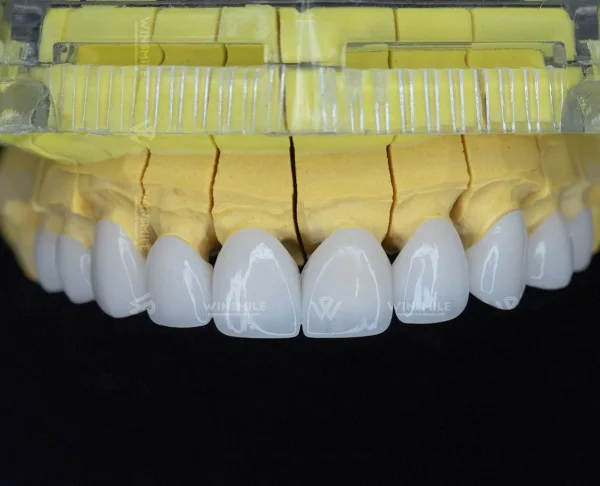 Understanding Premium Ceramics for Crowns & Veneers
A ceramic brand does not create a natural smile by itself. Outcome depends on indication, thickness, underlying shade, design, laboratory work, bonding/cementation and bite.
Understanding Premium Ceramics for Crowns & Veneers
A ceramic brand does not create a natural smile by itself. Outcome depends on indication, thickness, underlying shade, design, laboratory work, bonding/cementation and bite.


Dr. Nguyen Thi Thu Hien is publicly listed as a Dentistry graduate of Hanoi Medical University with a clinical focus on cosmetic ceramic restorations. Bui Bich Uyen leads aesthetic direction as Win Smile’s Smile Design Expert; the treating dentist remains responsible for diagnosis and indication.
Tooth form, shade and smile line are considered in relation to lips, face and personal character.
The level of preparation should follow the clinical indication rather than a fixed cosmetic template.
The treating dentist assesses tooth structure, gums, bite, existing restorations and disease before treatment.
Proportion, shade, bite and the overall visual impression are reviewed before final completion.
The goal is not simply “whiter teeth”, but understanding what needs to change and what should be preserved.
Distinguish whitening from a restorative indication.
Length, width, proportion or smile line may be involved.
Bite and available space need assessment before treatment.
Tooth structure, gum margins and existing crowns need review.
Design should suit the face and the patient’s preferred aesthetic.
Cosmetic & Restorative Dentist
Cosmetic ceramic dentist at Win Smile, focusing on shade, tooth form, smile line and the reassessment of existing restorations.
Graduated in Dentistry from Hanoi Medical University.
Veneers, crowns, cosmetic restoration and revision of previous ceramic work.
Works with CEO Bui Bich Uyen’s aesthetic direction to balance appearance with clinical indications.
Technology is useful only when its data is interpreted correctly in the individual clinical context.
Captures restorative geometry and digital records.
Assesses smile line, tooth form and facial relationship.
Helps align shade goals and naturalness before finalisation.
Provides visual records for design discussion and review.
Understand what you want to preserve and what you want to change.
Review tooth structure, gums, bite and active disease.
Plan tooth form, shade and the overall smile.
Proceed according to indication and assess harmony before finalisation.
Review appearance, function and aftercare.
These illustrations explain common treatment situations. Your diagnosis, treatment choice, clinician and timeline must be confirmed individually.
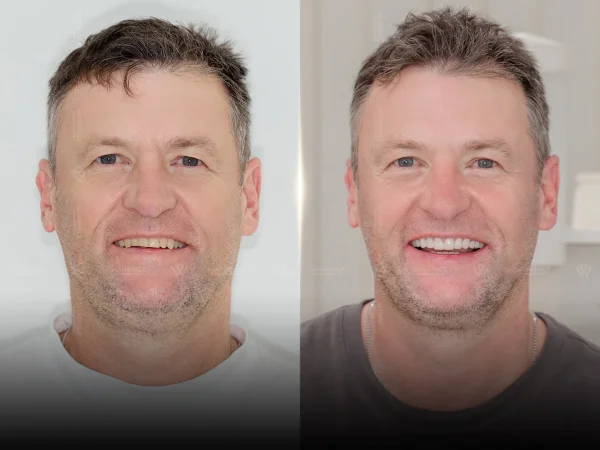
Design balances colour, tooth proportions and the smile line.
Learn about this treatment →
The plan should review teeth, gums and bite — not simply replace ceramics.
Learn about this treatment →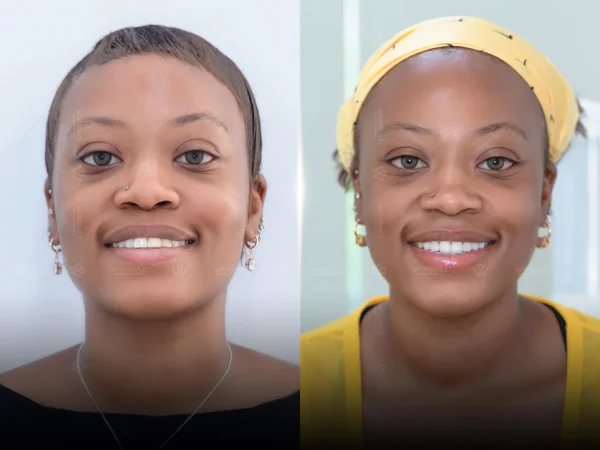
The goal is to preserve individuality rather than apply one smile template.
Learn about this treatment →Real experiences help you understand the service through the eyes of someone who has been through the journey.
 ▶
▶
A patient walks through agreeing a smile design, from the facial analysis session to the day the restorations went in.
Trust is not built by discussing benefits alone. Limitations and factors that can change the plan should be explained in advance.
Whitening, orthodontics or a more conservative option may be better for some cases.
The amount depends on the tooth and restoration type.
Inflammation or unstable gum margins should be controlled first.
Functional loading matters to long-term restoration performance.
The whitest shade is not automatically the most natural or flattering.
Hygiene, habits and review visits influence long-term outcomes.
For overseas patients, Win Smile reviews aesthetic goals, available records and travel dates before the trip. The final plan is confirmed only after direct clinical assessment of teeth, gums and bite.
A single number without context can be misleading. An estimate follows an understanding of the condition and is confirmed after an examination.
Treatment should not automatically involve every visible tooth.
The restoration type depends on tooth structure and indication.
Selected according to position, aesthetic demand and function.
Decay, endodontic or gum treatment may be needed first.
Old restorations, bite issues or smile-line changes may add steps.
Time required for preview, adjustment and final checks.
Veneers mainly cover the facial surface; crowns cover more of the tooth. The indication depends on tooth structure and treatment goals.
Preparation varies by tooth and restoration type; it cannot be decided responsibly without examination.
Preferences are discussed, but the final shade should also suit skin tone, lips, face and the desired level of naturalness.
It depends on tooth count, underlying conditions and the number of try-in/refinement steps.
The choice depends on tooth structure, existing restorations, bite, colour change and the amount of coverage clinically required. It should not be selected by appearance alone.
The amount of tooth preparation varies by indication. The treating dentist assesses how much — if any — preparation is appropriate for each tooth.
Active gum problems may need to be stabilised before cosmetic treatment so the design is built on a healthier foundation.
Yes. Photos and references can support an initial aesthetic conversation, while the final design still needs clinical examination and in-person shade/form review.
Start with your current condition, goals and travel dates. Win Smile can help you understand the next steps before you book your flight.