


← Back General & Advanced Care
General & Advanced Care
Root Canal Treatment
Manage inflamed or infected tissue inside the tooth when endodontic treatment is indicated.
Treatment names describe the range of options; the final indication is only confirmed after clinical assessment and diagnosis.
FROM TREATMENT NAME TO INDICATION
Start with the condition, not the technique name.
Manage inflamed or infected tissue inside the tooth when endodontic treatment is indicated.
DIAGNOSIS BEFORE INDICATION
What does a clinician assess before deciding?
Records are chosen to answer the clinical questions of the individual case; not every patient requires the same imaging, scan or procedure.
Pulp vitality
Root and canal anatomy
Remaining tooth structure
Whether this is a first treatment or a retreatment
METHOD & DECISION LOGIC
A sound plan is made by how decisions are reached.
These are clinical decision branches, not a menu for self-prescribing treatment.
Diagnosis
Pulpal/periapical diagnosis precedes root-canal treatment.
Isolation & disinfection
Cleaning, shaping and sealing require controlled isolation and irrigation.
Restorability
A tooth must be restorable; root canal cannot fix an unrestorable fracture.
Final restoration
The coronal restoration protects the treated tooth and seals the system.
CLINICAL DECISION STANDARDS
Evidence before technology. Responsibility before speed.
Four principles help keep the plan consistent from diagnosis through maintenance.
Triage first
Pain, swelling, infection and trauma are prioritised.
Preserve tissue
Restoration or surgery follows diagnosis and prognosis.
Disease control before elective care
Active caries, pulp or periodontal disease can change other plans.
Escalate when needed
Complex cases are coordinated rather than forced into routine care.
CLINICIANS & CREDENTIALS
Clinical responsibility is assigned by diagnosis
General care spans several disciplines. Win Smile publicly identifies Dr. Dinh Dinh Duc as Medical Director and surgery/implant clinician. For endodontic and periodontal topics, this website uses AAE/AAP evidence and does not invent a named Win Smile specialist where the public source set does not identify one.
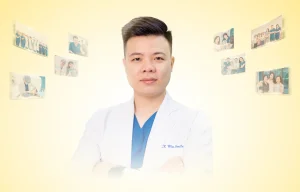
Dr. Dinh Dinh Duc
Medical Director · Implant & Oral Surgery- Dentistry – Hanoi Medical University
- Implant training at VDT
- Oral-surgery / extraction training at 108 Military Central Hospital
- Continuing education at the National Hospital of Odonto-Stomatology, Hanoi
- Vertical bone-regeneration course using PTFE membrane at ZimVie
- Participation in continuing dental education at Harvard University

Dr. Nguyen Thi Thu Hien
Cosmetic & Restorative Dentist- Dentistry – Hanoi Medical University
- Public focus: cosmetic ceramic restorations, shade, tooth form and smile line
- Public profile includes reassessment and aesthetic restoration of previous ceramic work
RECORDS & TECHNOLOGY
Technology supports the decision — it does not replace the clinician.
Technology is explained by its clinical value rather than by machine names alone.
Focused imaging
Chosen to answer a clinical question.
Pulp / periodontal tests
Help identify source and severity of disease.
Intraoral records
Document defects and support restorative planning.
Medical history
Medication, bleeding and healing factors can change decisions.
CLINICAL CASE FRAMEWORKS
The same service can require a very different plan.
These case frameworks illustrate decision logic and are not presented as real patient records unless verified.
Pain that doesn't match the visible damage
A small cavity can still involve deep pulp infection; diagnosis relies on more than what's visible.
A tooth with curved or narrow canals
Complex root anatomy can extend treatment time and may need additional imaging to navigate safely.
Retreatment of a previous root canal
A tooth that failed treatment elsewhere often needs different tools and a more careful reassessment than a first-time case.
LONG-TERM PLAN
Treatment does not end on the day it is finished.
- Maintain hygiene and risk-based reviews
- Monitor bite, tissues and restorations/appliances according to treatment type
- Keep records for long-term comparison
- Seek review early when new symptoms or changes appear
PATIENT STORY
Hear a real patient perspective.
The official Win Smile YouTube video adds a patient-experience perspective; testimonials do not predict individual outcomes.
FAQ
Frequently asked questions
Does root canal treatment hurt?
Modern root canal treatment is done under local anaesthesia and is generally no more uncomfortable than getting a filling. Some soreness afterward is normal and manageable.
How many visits does root canal treatment usually take?
This depends on the tooth's anatomy and the severity of infection. Some cases finish in one visit; others need two or more.
Can a tooth be saved instead of extracted?
Often, yes, if enough healthy structure remains and the infection is treatable. Your dentist can confirm whether the tooth is a good candidate.
What happens after root canal treatment?
The tooth typically needs a permanent restoration — a filling or crown — to protect it and restore full function.
Can root canal treatment fail?
It can, though it's uncommon. Reinfection or missed canal anatomy are possible causes, and retreatment or further evaluation can often still save the tooth.
Is a crown always needed after root canal treatment?
Not always, but it's common, especially for back teeth under heavy bite force, since a treated tooth can become more brittle over time.
Can I fly home shortly after root canal treatment?
This depends on your case and how you're recovering. Discuss timing with your dentist, especially if further stages or a final restoration are still needed.
How do I know if I need retreatment of an old root canal?
Persistent pain, swelling, or a new area of infection on X-ray are signs worth having reassessed, even years after the original treatment.
SOURCES & INFORMATION SCOPE
Specialty guidance for clinical logic — not marketing badges.
Citing ITI/AAO/ADA/ACP/AAE/AAP/AAOMS does not imply Win Smile certification. Individual credentials are listed only from Win Smile public profiles.
Start with your condition.
Share your concern or message WhatsApp so Win Smile can help with the next step.